
Skip to content

Southern Fried Science

Over 15 years of ocean science and conservation online

  • Home
  • About SFS
  • Authors
  • Support SFS

Our favorite sea monsters – Steller’s Sea Ape (#7)

Posted on September 6, 2010September 7, 2010 By Andrew Thaler 1 Comment on Our favorite sea monsters – Steller’s Sea Ape (#7)
Uncategorized

Georg Wilhelm Steller was a highly influential 18th century German naturalist who explored the coasts of Russia and Alaska. During his career, he described many species, including the northern fur seal, sea otter, Steller’s sea lion, Steller’s eider, spectacled cormorant, and the now extinct giant Steller’s sea cow. In addition to his many observed findings, he also described a fat, hairy creature with a dog-like head that he termed Simia marina, the sea ape.
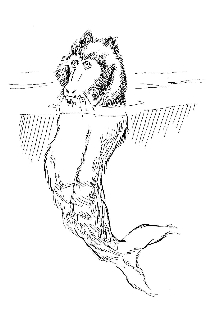
Image from Cryptomundo.com

The only notable record of the sea ape is in Steller’s description. No reputable sightings have been made since then. In the biography of Georg Steller, Steller’s Island, a juvenile northern fur seal is listed as the most likely culprit for this misidentification. Other theories put forth are that of a sea otter, a deformed fur seal, or a wandering monk seal.

What’s exceptional about the sea ape, and why this sea monster still persists after many centuries without a sighting, is that Steller was not an amateur observer or an unreliable source. Steller was one of the best naturalists of his time, and his species descriptions are still highly regarded. In his report he describes seeing the animal multiple times and even trying to shoot it (he missed). Given that, it doesn’t seem likely that he would misidentify something as common as a fur seal.

There’s a more likely explanation when considering the whole of Steller’s work. The sea ape was recorded in his book, The Beasts of the Sea, but there was no mention of the encounter in the ships log, nor did the sea ape appear in Steller’s official report of the expedition.

It may come as a shock to some of you, but biologists do have a sense of humor. I have a colleague who’s been try to name a polycheate genus Langerus (Latinized Irish slang for ‘wanker’) so that he can describe the ‘fat wanker worm’. One needs only to look at naming conventions for genes to see that some of us are a little twisted.

Whether a misidentified marine mammal or a great practical joke, the novelty of Steller’s Sea Ape earns it a spot on our list of favorite sea monsters.

~Southern Fried Scientist

Share this:

  • Click to share on Bluesky (Opens in new window) Bluesky
  • Click to share on Facebook (Opens in new window) Facebook
  • Click to share on Reddit (Opens in new window) Reddit
  • Click to share on Threads (Opens in new window) Threads
  • Click to share on WhatsApp (Opens in new window) WhatsApp
  • Click to share on Mastodon (Opens in new window) Mastodon

Related

Tags: Georg Wilhelm Steller Sea Monsters Stellar's Sea Ape

Post navigation

❮ Previous Post: 365 days of Darwin: September 6, 2010 (2/7)
Next Post: The Gentle Tasaday: An anthropological hoax ❯

You may also like

Weekly Salvage
Half-safe, climate change, deep-sea mining’s last frontier, and more! Monday Morning Salvage: Junes 12, 2017.
June 12, 2017
Uncategorized
Our favorite sea monsters – Mermaids (#5)
September 7, 2010
Conservation
Our favorite sea monsters – The Giant Manta Special Edition
September 8, 2010
Uncategorized
Our favorite sea monsters – The Kraken (#1)
September 10, 2010

One thought on “Our favorite sea monsters – Steller’s Sea Ape (#7)”

  1. BomaiCruz says:
    September 6, 2010 at 10:04 am

    Steller’s sea cow, was probably one of the first animals to be hunted to extinction by humans. I am not an expert on the matter but from what I know, native Alaskans used its watertight skin to build their kayaks.

    Georg Wilhelm Steller first described the animal in 1741 (one of the only descriptions to date)and twenty years later it was declared EXTINCT. Hunted to extinction because it was a slow mover and its fat provided an alternative to whale oil.

Comments are closed.

Popular Posts

What Ocean Ramsey does is not shark science or conservation: some brief thoughts on "the Shark Whisperer" documentaryWhat Ocean Ramsey does is not shark science or conservation: some brief thoughts on "the Shark Whisperer" documentaryJuly 2, 2025David Shiffman
I can serve on your graduate thesis committee. Here’s what you can expect of me, and what I expect in return.I can serve on your graduate thesis committee. Here’s what you can expect of me, and what I expect in return.October 16, 2025David Shiffman
Build a dirt cheap, tough-as-nails field computer in a Pelican caseBuild a dirt cheap, tough-as-nails field computer in a Pelican caseJuly 21, 2015Andrew Thaler
Shark of Darkness: Wrath of Submarine is a fake documentaryShark of Darkness: Wrath of Submarine is a fake documentaryAugust 10, 2014Michelle Jewell
Blackfish: the Science Behind the MovieBlackfish: the Science Behind the MovieSeptember 18, 2013Chris Parsons
I turned my woodshop into a personal solar farm.I turned my woodshop into a personal solar farm.June 21, 2021Andrew Thaler
What can the funniest shark memes on the internetz teach us about ocean science and conservation?What can the funniest shark memes on the internetz teach us about ocean science and conservation?November 8, 2013David Shiffman
I spent 50 days working out in Virtual Reality and everything went better than expected.I spent 50 days working out in Virtual Reality and everything went better than expected.May 16, 2019Andrew Thaler
Norway and Cook Islands put their deep-sea mining plans on pause.Norway and Cook Islands put their deep-sea mining plans on pause.December 3, 2025Andrew Thaler
"Twitter sucks now and all the cool kids are moving to Bluesky:" Our new survey shows that scientists no longer find Twitter professionally useful or pleasant"Twitter sucks now and all the cool kids are moving to Bluesky:" Our new survey shows that scientists no longer find Twitter professionally useful or pleasantAugust 19, 2025David Shiffman
Subscribe to our RSS Feed for updates whenever new articles are published.

We recommend Feedly for RSS management. It's like Google Reader, except it still exists.

Southern Fried Science

  • Home
  • About SFS
  • Authors
  • Support SFS


If you enjoy Southern Fried Science, consider contributing to our Patreon campaign.

Copyright © 2025 Southern Fried Science.

Theme: Oceanly Premium by ScriptsTown