Skip to content

Southern Fried Science

Over 15 years of ocean science and conservation online

  • Home
  • About SFS
  • Authors
  • Support SFS

Category: Blogging

Oarfish: The true tale of the fish we can’t seem to get enough of

Posted on August 19, 2015August 19, 2015 By Guest Writer 4 Comments on Oarfish: The true tale of the fish we can’t seem to get enough of
Blogging

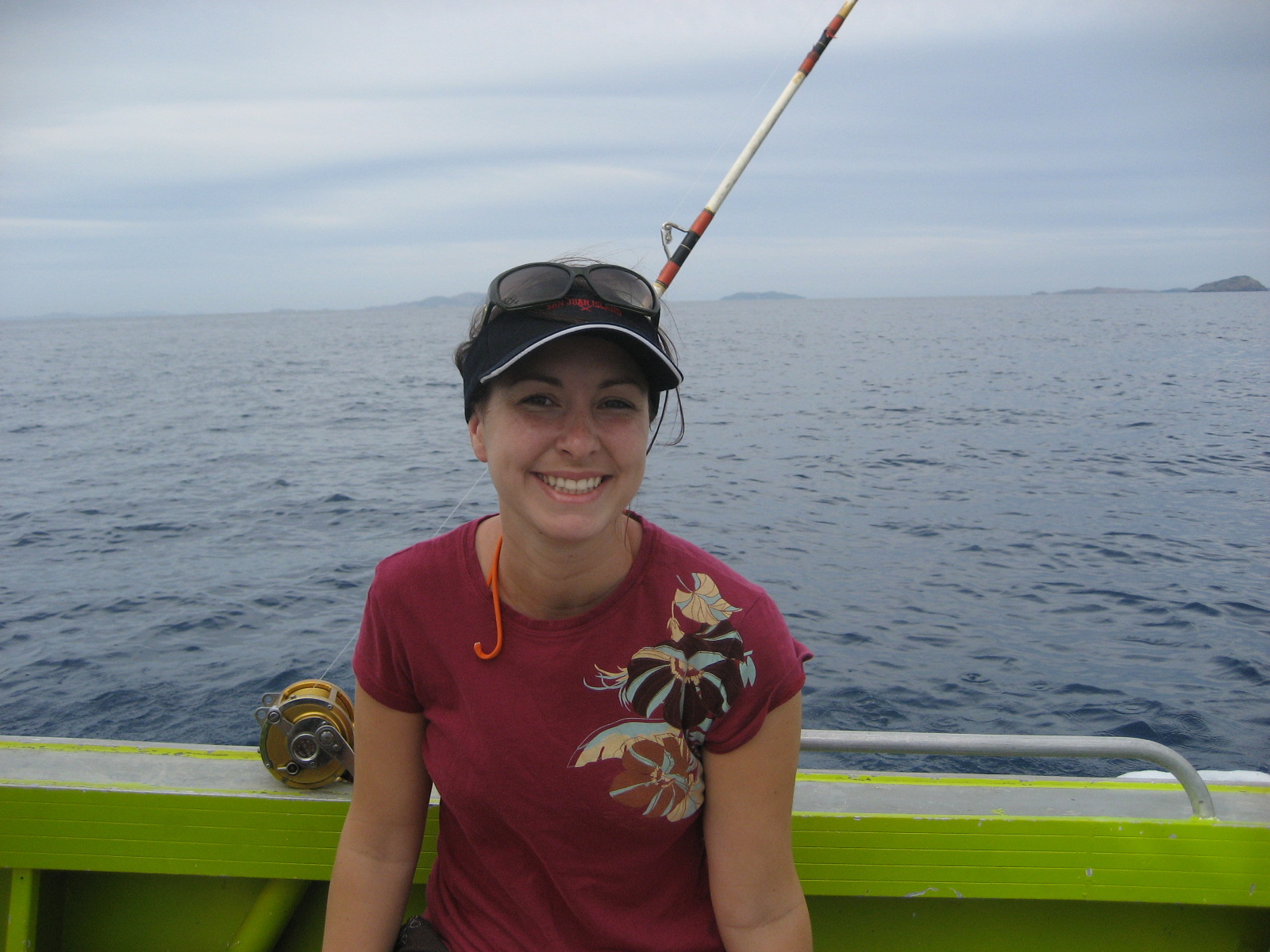
IMG_0355Dr. Misty Paig-Tran is Assistant Professor at California State University Fullerton. Her laboratory (Functional Anatomy, Biomechanics, and Biomaterials) studies how animals feed and move, among other things. Her research is focused on big filter-feeding animals (Sharks and Manta rays) and mid-deep water fishes – you know, the scary looking ones. You can learn about her research here, and you can follow her on twitter. 

Today I sit at my computer totally aghast that the media seems to have gone into a frenzy once again about the latest oarfish that washed up on Catalina yesterday. I get it. I too, as a marine biologist and self-admitted fish nerd, get totally excited any time a cool fish washes up. And I get extra excited about the oarfish in particular. Of course I do, I am currently studying the fish in my lab at Cal State. What’s not to like? It’s huge, silvery, and looks like a dragon. Myths about this fish are old and salty. However, there has been a ton of misinformation printed about this fish and now it’s my chance to set some things straight. So I will try to rectify this now. Ahem.
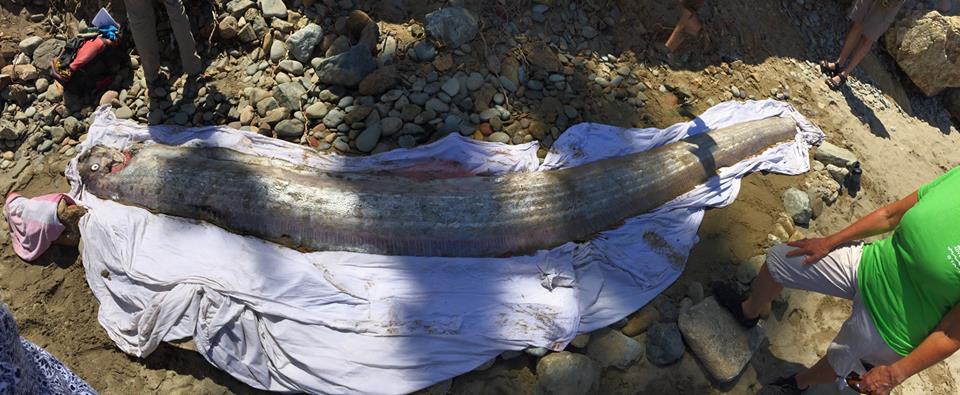
Oarfish


Read More “Oarfish: The true tale of the fish we can’t seem to get enough of” »

How I am fixing the internet

Posted on August 11, 2015 By Guest Writer 1 Comment on How I am fixing the internet
Blogging

black white headshotAlex Zrenner is a 2015 Kenan Summer Fellow and rising junior at Duke University. She is from St. Louis, Missouri and is pursuing a major in economics with a math minor. Each summer, the Kenan Institute for Ethics at Duke University supports undergraduate Kenan Summer Fellows, a program meant to help students explore what it means to live an ethical life. Portions of this post were originally published on the Kenan Institute for Ethics’ website. Alex has written weekly updates about her project here, and is also creating video blogs for the project that can be seen here.

My name is Alex Zrenner, and I am fixing the Internet. Well actually, I am researching the Internet. I have spent the past six weeks studying the ethics of cyber harassment and free speech as one of this year’s Kenan Summer Fellows.

Read More “How I am fixing the internet” »

11 thoughts about Cecil the lion

Posted on July 30, 2015July 31, 2015 By David Shiffman 6 Comments on 11 thoughts about Cecil the lion
Blogging
This is not Cecil the lion. I shot this lioness in 2000 in Tanzania... with a digital camera.
This is not Cecil the lion. I shot this lioness in 2000 in Tanzania… with a digital camera.

1) The manner in which Cecil the lion was killed (he slowly bled to death over nearly 2 days after being shot with an arrow before eventually being shot with a rifle) is strikingly inhumane and atypical of hunting. Lots of people seem to be fixating on the fact that he was skinned and beheaded after he was killed, but that’s pretty typical for hunting.

2) If the hunter who shot and killed Cecil the lion broke the law in doing so (this seems to be not entirely resolved, he had a permit to kill a lion but seems to have lured Cecil out of a protected area) he should absolutely be held responsible for it. In a court.

3) The hunter’s excuse of “I should not be responsible for anything that happened during the hunt because I hired guides to plan everything” is complete bullshit, both legally and morally.

Read More “11 thoughts about Cecil the lion” »

Geese, snakeheads, and the ones that got away: Southern Fried Science Book Club, week 5

Posted on July 27, 2015 By Andrew Thaler 1 Comment on Geese, snakeheads, and the ones that got away: Southern Fried Science Book Club, week 5
Blogging

Fortunately, it turns out last week’s chapter was a fluke, and we come down the home stretch of Eating Aliens with some of the strongest sections since the beginning. Canadian Geese was particularly fascinating, as it’s clear this is the species Landers has the most experience talking about. Te chapter is rich with the details, backstory, and information that I was hoping to find throughout the book, with less cynicism about the role of local and national government than we’ve seen previous. If you haven’t caught up yet, I recommend just skipping Nutria and going straight to Canadian Geese.

Then we’re back in the water with numerous marine and freshwater invasives, many from the aquarium trade. Plecos and armored catfish, released by amateur aquarists, are booming in Florida’s warm, protected waters, while tilapia is a holdover from the aquaculture industry. Frankly, there wasn’t much new in these chapters, other than the species–at this point introduced fish are old news, and while the details of each animal are slightly different, the causes and consequences are often the same. Personally, I don’t think I’d eat a pleco, but it doesn’t sound particularly unpalatable. Even though the story is pretty much the same–Landers struggles to catch anything, hijinks ensues, they finally eat it–this was a fun part of the book.

Read More “Geese, snakeheads, and the ones that got away: Southern Fried Science Book Club, week 5” »

American Elasmobranch Society announces new initiative to promote diversity in marine science

Posted on July 16, 2015 By David Shiffman 1 Comment on American Elasmobranch Society announces new initiative to promote diversity in marine science
Blogging

The American Elasmobranch Society, the world’s largest and oldest professional society focusing on shark and ray research, announced a new diversity initiative today. The new Young Professional Recruitment Fund will identify and contact students, postdocs and early career professional from historically underrepresented minority groups and from developing countries whose research focuses on elasmobranchs. Additionally, if you are … Read More “American Elasmobranch Society announces new initiative to promote diversity in marine science” »

Chasing the Elusive Nutria: Southern Fried Science Book Club, week 4

Posted on July 14, 2015 By Andrew Thaler
Blogging

I’m going to have to start with an apology. I intended to get to this chapter before #JacquesWeek kicked off and sucked up all of my time, but I just couldn’t. This chapter was… not fun and not particularly informative. In the longest chapter of the book, Jackson’s fails to hunt Nutria for 90% of … Read More “Chasing the Elusive Nutria: Southern Fried Science Book Club, week 4” »

Need a #SharkWeek Alternative? Watch classic Cousteau documentaries with us for #JacquesWeek

Posted on July 6, 2015July 9, 2015 By Andrew Thaler
Blogging

Last night, I was in the mood for some Cousteau. The classics from the Undersea World, Odyssey, River Expeditions, and  host of other long running series, still hold up as some of the best ocean documentaries of all time. So I picked a few of my favorites, pulled some people together online, and called it #JacquesWeek, an alternative to Shark Week for those who either don’t get the Discovery Channel or just want something different.

“The sea, once it casts its spell, holds one in its net of wonder forever.”

Jacques Yves Cousteau

I’ll be honest, I’m burned out on Shark Week. After several years of intense livetweeting, post-show debunking, and high-level critique (look for my and Shiffman’s paper on best practices for responding to fake mass media documentaries in Ocean and Coastal Management later this year), I find that I just don’t have much more to say. Some shows will be good. Some shows will be great. Some shows will be bad.

Jacques Cousteau has never let me down. Sure, sometimes the science is off (pretty much everything in Blind Prophets of Easter Island is incorrect, for example), but that’s because the Calypso crew was working at the boundaries of human knowledge, and their work comes off earnest, heartfelt, and compassionate. And so full of wonder. Much of what Cousteau’s team did was done for the very first time.

Read More “Need a #SharkWeek Alternative? Watch classic Cousteau documentaries with us for #JacquesWeek” »

Does Shark Week portrayal of sharks matter?

Posted on June 29, 2015July 3, 2015 By David Shiffman 6 Comments on Does Shark Week portrayal of sharks matter?
Blogging, Popular Culture, Science

sharkI’ve been critical of factual inaccuracy and fearmongering on Shark Week documentaries for years. But how big of a problem is this, and how do we know? I asked some of the authors of three recent scientific studies*  to summarize the evidence.

Many species of sharks are in desperate need of conservation. Twenty-four percent of all known species of sharks, skates and rays are considered Threatened with extinction by the IUCN Red List. Using a variety of different methods, scientists have documented rapid and severe population declines in many species of sharks all over the world.

Conservation requires public support. In a participatory democracy, new policies and regulations require some public support to pass. It’s easy to get public support to conserve cute and cuddly animals, but ugly animals need protection too. So do animals that scare people, like sharks.

Read More “Does Shark Week portrayal of sharks matter?” »

Lionfishing, Green Crabbing, and Carp Dunking: Southern Fried Science Book Club, week 3

Posted on June 22, 2015 By Andrew Thaler 2 Comments on Lionfishing, Green Crabbing, and Carp Dunking: Southern Fried Science Book Club, week 3
Blogging

First off, let me just say, that invasive Asian Carp really do jump out of the water and whack people in the face.

httpv://www.youtube.com/watch?v=qfG4vsJ5_xI

Of all the chapters we’ve read so far, these three were the first that really made me want to try eating invasive species. Maybe it’s because I’m an ocean person, but those fish sounded delicious.

The lionfish chapter was especially intriguing, since I spent a lot of time on the southern tip of Eleuthera during 2001, though I don’t recall ever seeing a single lionfish. I do remember lionfish from the coast of North Carolina, where they’ve taken hold and now completely dominate the local shipwrecks. Lionfish are a nightmare. They have no predators in Atlantic waters. They are extremely fecund. They are voracious generalists, happy to eat anything that fits in their mouths. Most worrying, they can’t be fished via conventional means. Lionfish don’t take the bait, they have to be speared, but they also occur at depths of greater then 200 meters, well beyond any recreation SCUBA or freediving limits.

Read More “Lionfishing, Green Crabbing, and Carp Dunking: Southern Fried Science Book Club, week 3” »

Tactical Activism: Four characteristics of an Astroturfing campaign

Posted on June 16, 2015September 21, 2016 By Andrew Thaler
Blogging

Astroturfing is the strategy of using multiple, fabricated social media accounts to produce the appearance of grassroot support for an issue or movement. At its most basic, astroturfing involves ‘sockpuppets’ fake accounts designed to get around bans and blocks or make it seem like more people are participating in a conversation than actually are. At its most sinister, astroturfing enlists a massive industry that specializes in blanketing the internet with apparently unique content that is nevertheless the product of just a few, often paid participants. The New York Times recently ran an exposé on The Agency, a notorious Russian spamhouse that generates mountains of content designed specifically to sow discord across the internet. Somewhere lying between these extremes is Persona Management Software, tools specifically designed to allow institutions to operate multiple, apparently genuine, social media profiles. Many social media PR firms use persona management (or the more palatable “reputation management”) to boost their client’s online reputation. The federal government, incidentally, does, too.

Astroturfing tactics have only gotten more sophisticated in the past five years. Its nearly impossible to tell, at a glance, whether the person your interacting with is part of a sophisticated astroturfing campaign or a genuine human that simply disagrees with you. There are, unfortunately, no guaranteed tests to confirm whether someone is or is not an astroturfer, but there are general patterns that suggest you’re dealing with a managed-persona rather than a genuine person. Taking multiple lines of evidence into account can help you identify and excise astroturfing from your online experience.

Note: in the past five years, I have identified numerous campaigns of which I confidently identify as astroturfing (and in at least two cases have had my suspicions confirmed by directly contacting their PR departments), both in opposition to, and in agreement with environmental (and particularly ocean) issues. However, as this article is intended to be a resource for anyone looking to identify an astroturfing campaign and I am neither interested in dragging up old history nor unnecessarily politicizing this article by calling out bad actors (who may or may not have learned their lesson), I am not going to identify specific instances. Assume that both your favorite and least favorite ocean/environment/political groups have, at some point, attempted to astroturf an issue. 

It’s important to recognize that astroturfing is about volume. If you recognize some of these patterns in specific social media profiles, but they are not part of larger movement, you’re likely not dealing with astroturfing. At worst, you might have a run-of-the-mill troll. In order of least to most complicated, here are four patterns to look for when identifying an astroturfing campaign.

Read More “Tactical Activism: Four characteristics of an Astroturfing campaign” »

Posts pagination

Previous 1 … 8 9 10 … 19 Next

Popular Posts

What Ocean Ramsey does is not shark science or conservation: some brief thoughts on "the Shark Whisperer" documentaryWhat Ocean Ramsey does is not shark science or conservation: some brief thoughts on "the Shark Whisperer" documentaryJuly 2, 2025David Shiffman
I can serve on your graduate thesis committee. Here’s what you can expect of me, and what I expect in return.I can serve on your graduate thesis committee. Here’s what you can expect of me, and what I expect in return.October 16, 2025David Shiffman
Shark of Darkness: Wrath of Submarine is a fake documentaryShark of Darkness: Wrath of Submarine is a fake documentaryAugust 10, 2014Michelle Jewell
Build a dirt cheap, tough-as-nails field computer in a Pelican caseBuild a dirt cheap, tough-as-nails field computer in a Pelican caseJuly 21, 2015Andrew Thaler
Blackfish: the Science Behind the MovieBlackfish: the Science Behind the MovieSeptember 18, 2013Chris Parsons
I turned my woodshop into a personal solar farm.I turned my woodshop into a personal solar farm.June 21, 2021Andrew Thaler
I spent 50 days working out in Virtual Reality and everything went better than expected.I spent 50 days working out in Virtual Reality and everything went better than expected.May 16, 2019Andrew Thaler
Norway and Cook Islands put their deep-sea mining plans on pause.Norway and Cook Islands put their deep-sea mining plans on pause.December 3, 2025Andrew Thaler
What can the funniest shark memes on the internetz teach us about ocean science and conservation?What can the funniest shark memes on the internetz teach us about ocean science and conservation?November 8, 2013David Shiffman
Nodules, Lost Mines, and Dark Oxygen: A new documentary on deep-sea mining asks important questions about the future of the industry.Nodules, Lost Mines, and Dark Oxygen: A new documentary on deep-sea mining asks important questions about the future of the industry.July 24, 2025Andrew Thaler
Subscribe to our RSS Feed for updates whenever new articles are published.

We recommend Feedly for RSS management. It's like Google Reader, except it still exists.

Southern Fried Science

  • Home
  • About SFS
  • Authors
  • Support SFS


If you enjoy Southern Fried Science, consider contributing to our Patreon campaign.

Copyright © 2025 Southern Fried Science.

Theme: Oceanly Premium by ScriptsTown