Skip to content

Southern Fried Science

Over 15 years of ocean science and conservation online

  • Home
  • About SFS
  • Authors
  • Support SFS

Category: Uncategorized

The tuna that ate a seagull, and other bird swallowing marine megafauna

Posted on April 26, 2016April 28, 2016 By Michelle Jewell 2 Comments on The tuna that ate a seagull, and other bird swallowing marine megafauna
The tuna that ate a seagull, and other bird swallowing marine megafauna
Uncategorized

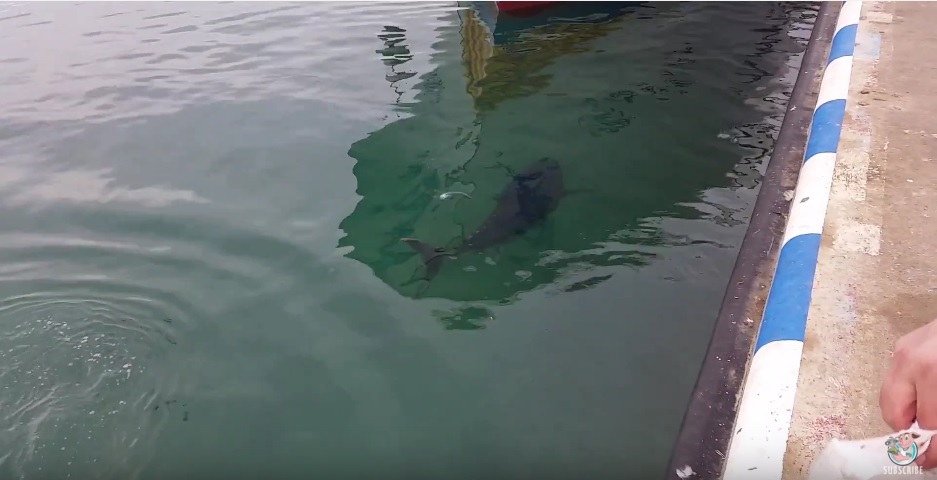
Once again, the internet is in a fervour over a rarely documented, but pretty common, animal interaction.  The video below shows fishermen at a pier in L’Escala, Spain tossing small fish to a tuna.  A nearby seagull went for the same fish and was ingested by the tuna, much to everyone’s surprise.  Naturally, the tuna spat out … Read More “The tuna that ate a seagull, and other bird swallowing marine megafauna” »

Fun Science FRIEDay – Osprey Version of the Truman Show #ospreycam

Posted on April 15, 2016 By Kersey Sturdivant
Uncategorized

Do you ever get that feeling that you are being watched? I imagine that is what the ospreys at the nesting platform at the Virginia Institute of Marine Science (VIMS) must feel, if they notice at all. These birds have a camera that is trained on their nest 24/7 during the osprey breeding season (generally from mid-March … Read More “Fun Science FRIEDay – Osprey Version of the Truman Show #ospreycam” »

Ocean Kickstarter of the Month: New Robot to Explore the Depths of Yellowstone Lake

Posted on April 14, 2016 By Andrew Thaler
Uncategorized

We are engineers and explorers who plan to help Yellowstone scientists make what could be tomorrow’s greatest discoveries.

New Robot to Explore the Depths of Yellowstone Lake

The Global Foundation for Ocean Exploration is a non-profit engineering group that designs and builds robots to explore the world’s oceans and large lakes. They are trying to build Yogi, a small research ROV to explore the depths of Yellowstone Lake in Yellowstone National Park. Yellowstone Lake is a fascinating water body, with hydrothermal vents similar to the deep-sea vents that my primary research focuses on.

I’ll let them explain why this project is so cool:

Why explore Yellowstone Lake?

Yellowstone started a proud tradition of protecting our planet’s most unique environments when it became the world’s first National Park more than a century ago. However, there is a part of Yellowstone that very few people have visited. An entire ecosystem that is hidden from us at the surface. A place that scientists are eager to study and may harbor unknown life; the depths of Yellowstone Lake.

We now know that the bottom of the Lake is far from barren, hosting species of crustaceans, sponges, and even small creatures that feed off of the Earth’s heat and chemistry rather than the Sun. ‘Thermophilic’ (or hot water-loving) microbes thrive in the relatively high-temperatures immediately surrounding active thermal features at the bottom of the Lake and scattered throughout Yellowstone Park. These creatures may be microscopic but they have the potential to profoundly influence the medical and biological sciences.

New Robot to Explore the Depths of Yellowstone Lake

Onward to the Ocean Kickstarter Criteria!

Read More “Ocean Kickstarter of the Month: New Robot to Explore the Depths of Yellowstone Lake” »
Behaviour Bites: The uncomfortable truth about that penguin video

Posted on March 31, 2016 By Michelle Jewell
Uncategorized

A brilliant thing about the internet is how natural events are immediately accessible to the world-wide public.  Someone can record a cheetah jumping onto their safari car and I can watch it in my Netherlands office less than 24 hours later.  Sadly, most animal videos that go viral are ones that feature animal behaviour that … Read More “Behaviour Bites: The uncomfortable truth about that penguin video” »

On Naming Boats, or why we love Boaty McBoatface.

Posted on March 23, 2016March 23, 2016 By Andrew Thaler 1 Comment on On Naming Boats, or why we love Boaty McBoatface.
Uncategorized

My first personal research vessel, a 20′ runabout with a huge staging area, was name ‘Black Smoker‘. It was an homage to the hydrothermal vents I study (via a much larger vessel), but also a reference to the nasty old Force 125 outboard, that burned oil like it had just driven the Seleucid Empire from the Temple Mount. My second boat, was small, but lighter, faster, and much more aggressive. I sailed it in some seriously marginal seas. I named it ‘Iffy’.

The French named two different research vessels ‘Pourquoi Pas?’ (literally “Why not?”) which, in addition to being hilarious, is also the answer to the question: Why did you name your ship Pourquoi Pas? The University of Wisconsin-Madison has been studying  Lake Mendota for over 6 years via the research platform ‘David Buoy’. And though the Celtic Explorer was given a strong and noble name, an engine incident on one fateful cruise led many in the Irish research community to informally rechristen it the Celtic Exploder (true story: I once reviewed a proposal that referred to it as the Exploder, throughout).

Giving a research vessel a silly name is a deep and abiding tradition within the marine research community. And, frankly, even if a vessel has a Very Serious Name (TM), the crew is still going to call it something else.

I think Boaty McBoatface is a perfectly good name for a ship, and I agree with Craig McClain that it is a great science outreach opportunity. Did you know the U launched Sikuliag last year? Or that the British christened the Discovery in 2013? No? Well I bet you know about Boaty McBoatface. 

Read More “On Naming Boats, or why we love Boaty McBoatface.” »

A comprehensive list of statements made about the ocean by candidates during the 2016 election season.

Posted on March 17, 2016 By Andrew Thaler
Uncategorized

1. “I was once bitten by an octopus at the beach and got terribly ill. (Yes, apparently octopuses can be poisonous.)” Senator Ted Cruz

Singing Science: Weather vs. Climate with lyrics for teachers

Posted on March 14, 2016 By Michelle Jewell
Singing Science: Weather vs. Climate with lyrics for teachers
Uncategorized

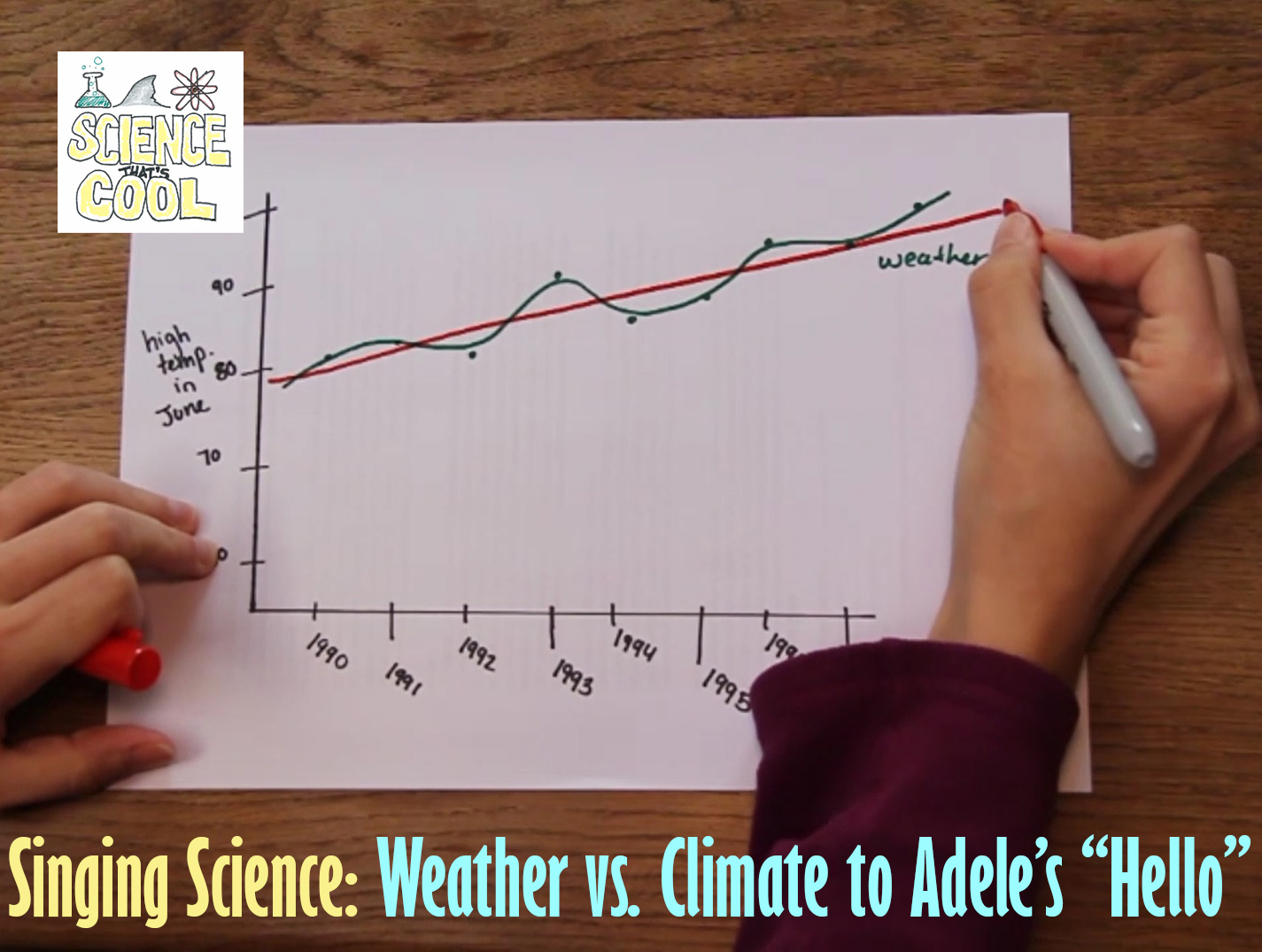
The month of February 2016 just broke a global temperature record, previously held by… January…2016.

While the Trubama climate plans are being praised, the comments section of this Guardian article was still inundated with “Well, it’s cold where I am” posts.  Perhaps we need to create more awareness about the difference between weather and climate…

I know, I’m not supposed to talk about this, but I love to sing.  Every neighbor, flat mate, and unwilling car passenger knows this.  In fact, the only thing I love as much as singing is teaching science, but the metaphorical light bulb didn’t come on until I attended a SciComm workshop in Portugal.  Why not sing about science like many others?  Maybe even weather and climate??

Adele songs were the obvious choice, both for singability and availability of karaoke versions on YouTube, so I began my research.  I asked facebook if this would be a valuable addition to the internets, or best not to talk about it ever again, and the response was significantly positive.  Thus, #SingingScience was born and with it a commitment to do more of these when I have free time.

Enjoy, Weather vs. Climate set to Adele’s “Hello”

**Note (because evidently it’s not obvious):  This is not real meteorological data.

Here are the lyrics for any science teachers who would like them:

Read More “Singing Science: Weather vs. Climate with lyrics for teachers” »

Fun Science FRIEDay – Bionic Eye

Posted on February 5, 2016February 9, 2016 By Kersey Sturdivant
Science, Uncategorized

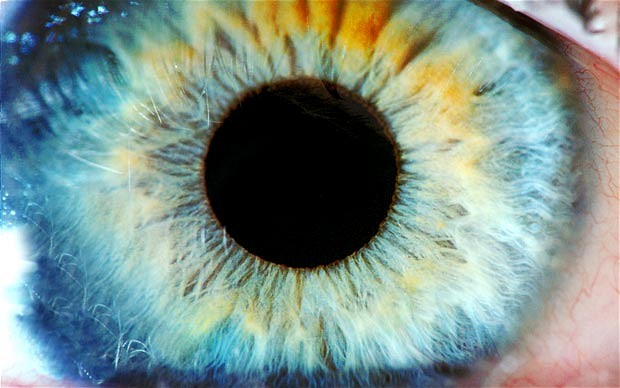
Every year modern medicine brings more and more surprises. It really does seem that the limitations of man’s achievements are solely limited to our creative ability to dream what is possible. This week we bring you the bionic eye. As part of an ongoing trial at Oxford’s John Radcliffe Hospital surgeons implanted a micro electric chip into a patients eye restoring part of her sight.

Human eye.
Human eye.

Read More “Fun Science FRIEDay – Bionic Eye” »

Making your scientific outreach go further

Posted on February 3, 2016February 4, 2016 By Guest Writer
Uncategorized

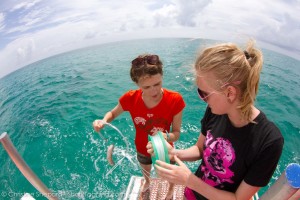
1009103_10151717293838265_589812446_oCatherine Macdonald is the Executive Director of Field School, an interdisciplinary field science training program. She is also a fifth year PhD student at the Abess Center for Ecosystem Science and Policy at the University of Miami, and the Intern Coordinator for the Shark Research and Conservation Program (SRC).

Like a lot of the scientists I know, teaching (outside the classroom) and outreach are a key part of the work I do, and one of the things I love most about my job. This isn’t because scientists accrue big rewards for prioritizing outreach (in the academic tenure system, we can actually pay a pretty high price for spending time on anything other than research/required teaching/publication) but because we want to get people excited about science and care a lot about the subjects we study.

Unfortunately, we aren’t always maximizing our positive impacts on students or citizen scientists who engage with our research—maybe because we aren’t familiar enough with the vast and labyrinthine social science literature on what works in education.* (I wish I had a dollar for every time a natural scientist, in talking to me about education or outreach, has said “if only someone would study this…” without being aware that education researchers have been studying it, in some cases for decades.)

This list is in no way comprehensive, but distills some key points I’ve come across that have influenced the way I teach and interact with students. My thinking here is geared towards programs like those I work with, which take students into the field and involve them in science or outreach in a direct, hands-on way. Although I think it’s great for scientists to go into classrooms and give talks, this advice is only partially applicable to that kind of outreach, and is really geared towards out-of-classroom folks.

Let’s also note that a variety of good potential outcomes have been shown to result from experiential education programs, including increased academic success, improved self-esteem and “self-concept” (i.e., how kids see themselves), increased personal and social responsibility, and better attitudes towards and relationships with adults. There’s no question that those of us who work with students above and beyond what is required or expected of us are doing a good thing. The question becomes: how do we do that good thing better?

* In this list, I am not attempting to differentiate between environmental education, experiential education, service education, scientific outreach, adventure education or any of the other various terms which can be used to describe similar programs. Although there can be important differences in approaches and goals among these categories, it is key elements that the most effective programs have in common that I am interested in.

Read More “Making your scientific outreach go further” »

The final server update: All systems normal.

Posted on January 31, 2016January 26, 2016 By Andrew Thaler
Uncategorized

He showed me exactly what we needed to see. He? I, me, we. The me that is yet to be. The Nautilus is not of the future. Only data flow backwards. That much, I understand. At least I think I understand. He that is, well, me, eventually, understood. Will understand. The message was a code. … Read More “The final server update: All systems normal.” »

Posts pagination

Previous 1 … 20 21 22 … 118 Next

Popular Posts

What Ocean Ramsey does is not shark science or conservation: some brief thoughts on "the Shark Whisperer" documentaryWhat Ocean Ramsey does is not shark science or conservation: some brief thoughts on "the Shark Whisperer" documentaryJuly 2, 2025David Shiffman
I can serve on your graduate thesis committee. Here’s what you can expect of me, and what I expect in return.I can serve on your graduate thesis committee. Here’s what you can expect of me, and what I expect in return.October 16, 2025David Shiffman
Build a dirt cheap, tough-as-nails field computer in a Pelican caseBuild a dirt cheap, tough-as-nails field computer in a Pelican caseJuly 21, 2015Andrew Thaler
Shark of Darkness: Wrath of Submarine is a fake documentaryShark of Darkness: Wrath of Submarine is a fake documentaryAugust 10, 2014Michelle Jewell
I turned my woodshop into a personal solar farm.I turned my woodshop into a personal solar farm.June 21, 2021Andrew Thaler
Blackfish: the Science Behind the MovieBlackfish: the Science Behind the MovieSeptember 18, 2013Chris Parsons
What can the funniest shark memes on the internetz teach us about ocean science and conservation?What can the funniest shark memes on the internetz teach us about ocean science and conservation?November 8, 2013David Shiffman
I spent 50 days working out in Virtual Reality and everything went better than expected.I spent 50 days working out in Virtual Reality and everything went better than expected.May 16, 2019Andrew Thaler
Norway and Cook Islands put their deep-sea mining plans on pause.Norway and Cook Islands put their deep-sea mining plans on pause.December 3, 2025Andrew Thaler
"Twitter sucks now and all the cool kids are moving to Bluesky:" Our new survey shows that scientists no longer find Twitter professionally useful or pleasant"Twitter sucks now and all the cool kids are moving to Bluesky:" Our new survey shows that scientists no longer find Twitter professionally useful or pleasantAugust 19, 2025David Shiffman
Subscribe to our RSS Feed for updates whenever new articles are published.

We recommend Feedly for RSS management. It's like Google Reader, except it still exists.

Southern Fried Science

  • Home
  • About SFS
  • Authors
  • Support SFS


If you enjoy Southern Fried Science, consider contributing to our Patreon campaign.

Copyright © 2025 Southern Fried Science.

Theme: Oceanly Premium by ScriptsTown