Skip to content

Southern Fried Science

Over 15 years of ocean science and conservation online

  • Home
  • About SFS
  • Authors
  • Support SFS

Tag: ROV

Science as graphic novel, baby eels, anglerfish emoji, drone ocean rescue, and more! Monday Morning Salvage: January 22, 2018.

Posted on January 22, 2018January 21, 2018 By Andrew Thaler 1 Comment on Science as graphic novel, baby eels, anglerfish emoji, drone ocean rescue, and more! Monday Morning Salvage: January 22, 2018.
Weekly Salvage

Fog Horn (A Call to Action)

  • The US Government is shut down. This is not great news for science (at the moment, my project to train ROV technicians and deliver 5 – 10 observation-class underwater robots to the Commonwealth of the Northern Mariana Islands is on hold pending resolution). Call you congressperson and give them an earful. Call you senator and give them an earful.

Flotsam (what we’re obsessed with right now)

  • Women Writing About the Wild: 25 Essential Authors: A primer on who to start reading and who you’ve been overlooking for too long.
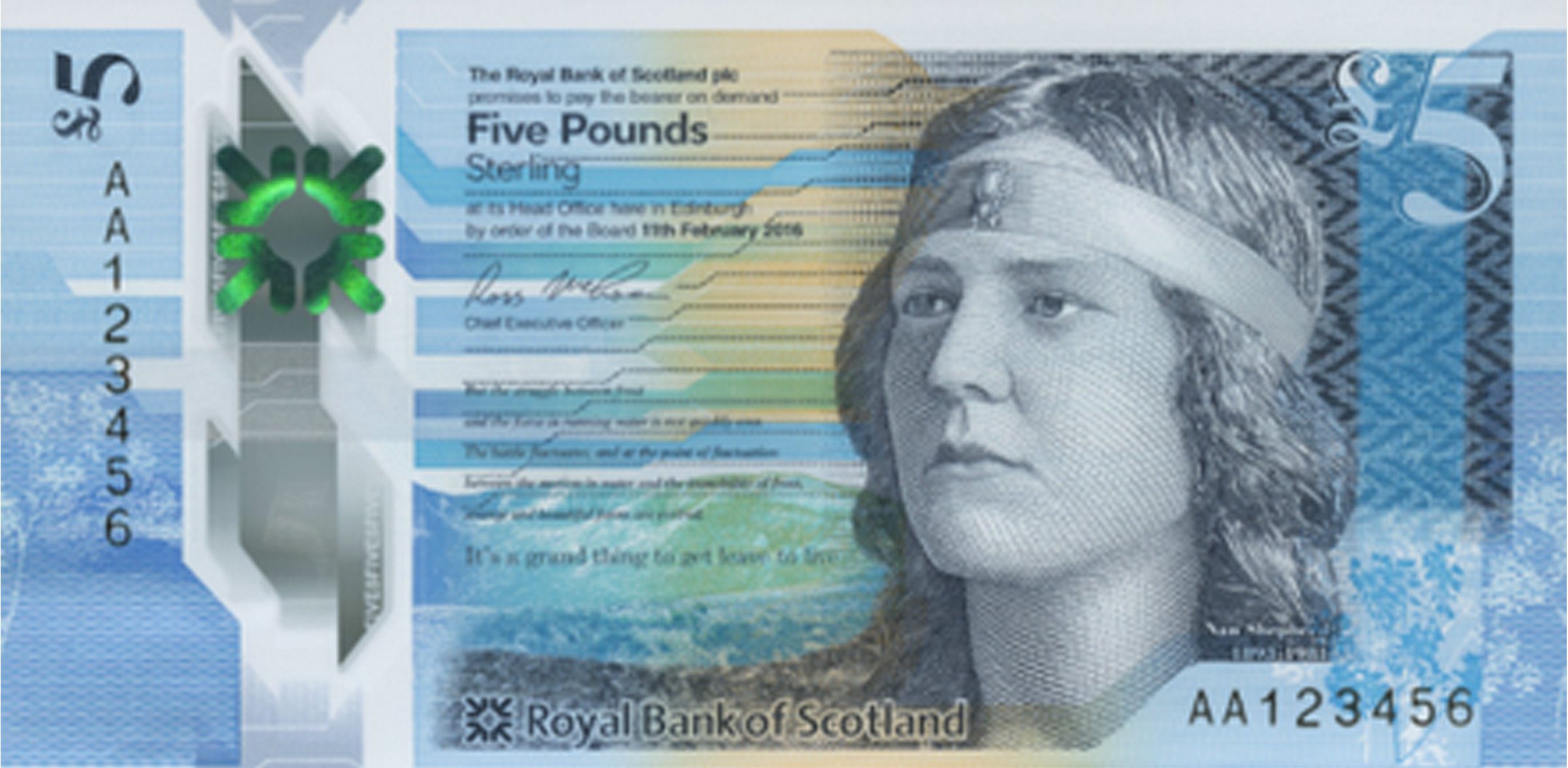
Nan Shepherd. (Wikimedia Commons)
  • This paper: Managing marine socio-ecological systems: picturing the future, which, holy mola, is written in graphic novel format!
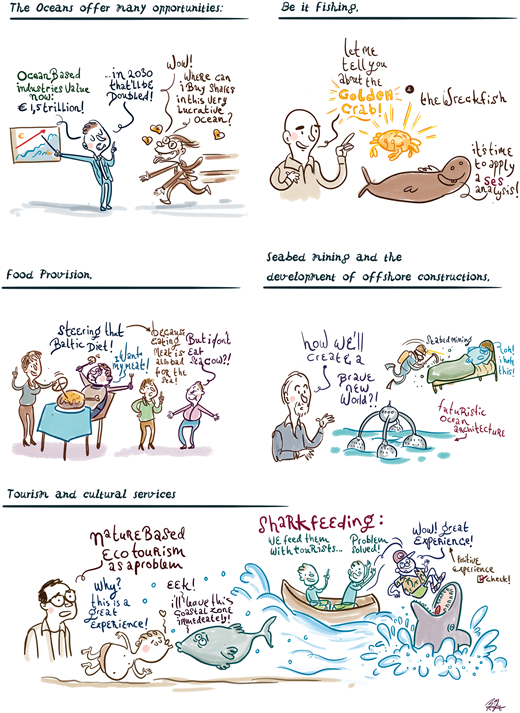
Managing marine socio-ecological systems: picturing the future
Managing marine socio-ecological systems: picturing the future.

Read More “Science as graphic novel, baby eels, anglerfish emoji, drone ocean rescue, and more! Monday Morning Salvage: January 22, 2018.” »

Parasitic barnacles, a code of conduct for marine conservation, #BillMeetScienceTwitter, and more! Monday Morning Salvage: May 22, 2017.

Posted on May 22, 2017May 22, 2017 By Andrew Thaler
Weekly Salvage

Fog Horn (A Call to Action)

  • 27 National Monuments are under review by the Department of the Interior. Our Nation Monuments are our National Treasures. Don’t let them be sold to the highest bidder! Submit formal public comments on the DOI Monument Review and make your voice heard.

Flotsam (what we’re obsessed with right now)

  • This parasitic barnacle, Sacculina carcini, replacing the reproductive organs of a crab.
  • Hat tip to Tommy Leung, who’s twitter feed is a gold mine of fantastic parasites and where to find them.
  • #BillMeetScienceTwitter. What started as an inquiry into whether science celebrities really engage with practicing scientists on a regular basic morphed into the best way to find new scientists to follow on Twitter. I’m curating a massive list of all the self-identified Ocean Scientists that participated.

Jetsam (what we’re enjoying from around the web)

  • Deep-sea mining is gearing up on the high seas, and international regulations is still lagging far behind technology: The Wild West of Deep-Sea Mining.
  • oceanbites rolls out an excellent overview of the different kinds of robots used in conducting deep-sea research.
  • Beyond drug lords and conservationists: Who is missing in the coverage of the vaquita’s demise? from the legendary team at Deep Sea News.
  • Henderson Island is isolated and uninhabited, so why are all its beaches so completely covered in garbage? Spoilers: It’s because the planet is an interconnected global system with impacts felt far beyond the source of insult.
  • Bone-eating snot flower worm will never not be my favorite common name. Tiny Zombie Worms Are the Beavers of the Deep.
  • The history of the entire world, in one entertaining YouTube video (via Vox):
  • Are Ships The Careless Giants Of The Sea? Yes, but they don’t have to be.
  • Trump’s EPA Greenlights a Nasty Chemical. A Month Later, It Poisons a Bunch of Farmworkers.
  • Trump country is flooding, and climate ideas are shifting.
  • The Ocean as the New Frontier of Climate Action.
  • The Antarctic Peninsula is 3 degrees warming than is used to be, and that means plants are growing and Antarctica is getting greener.
  • The long history of ocean drilling and scientific discovery.
  • A tiny anchovy could be a silver bullet for malnutrition in Peru—if only we would let it: The Fish that Smells like Money.
  • I talk alot about e-waste and disposable electronics, which is why I’m excited to see modular, open-source smartphone projects finally start to mature. The ZeroPhone looks like on of the most promising additions to this space.
  • Skeptic Magazine has a pseudoscience problems. Unfortunately, this time it’s the skeptics promoting some pretty eyebrow-raising junk science. I went a little deeper into this on Twitter.

Read More “Parasitic barnacles, a code of conduct for marine conservation, #BillMeetScienceTwitter, and more! Monday Morning Salvage: May 22, 2017.” »

Ocean Kickstarter of the Month: New Robot to Explore the Depths of Yellowstone Lake

Posted on April 14, 2016 By Andrew Thaler
Uncategorized

We are engineers and explorers who plan to help Yellowstone scientists make what could be tomorrow’s greatest discoveries.

New Robot to Explore the Depths of Yellowstone Lake

The Global Foundation for Ocean Exploration is a non-profit engineering group that designs and builds robots to explore the world’s oceans and large lakes. They are trying to build Yogi, a small research ROV to explore the depths of Yellowstone Lake in Yellowstone National Park. Yellowstone Lake is a fascinating water body, with hydrothermal vents similar to the deep-sea vents that my primary research focuses on.

I’ll let them explain why this project is so cool:

Why explore Yellowstone Lake?

Yellowstone started a proud tradition of protecting our planet’s most unique environments when it became the world’s first National Park more than a century ago. However, there is a part of Yellowstone that very few people have visited. An entire ecosystem that is hidden from us at the surface. A place that scientists are eager to study and may harbor unknown life; the depths of Yellowstone Lake.

We now know that the bottom of the Lake is far from barren, hosting species of crustaceans, sponges, and even small creatures that feed off of the Earth’s heat and chemistry rather than the Sun. ‘Thermophilic’ (or hot water-loving) microbes thrive in the relatively high-temperatures immediately surrounding active thermal features at the bottom of the Lake and scattered throughout Yellowstone Park. These creatures may be microscopic but they have the potential to profoundly influence the medical and biological sciences.

New Robot to Explore the Depths of Yellowstone Lake

Onward to the Ocean Kickstarter Criteria!

Read More “Ocean Kickstarter of the Month: New Robot to Explore the Depths of Yellowstone Lake” »

Keeping your robot invasions under control.

Posted on September 28, 2015 By Andrew Thaler
Conservation, Education, Science

It’s been a big week for papers here at Southern Fried Science. This morning, Amy, myself, William (of Bomai Cruz fame), and Dominik and Erika of OpenROV published our guidelines on minimizing the potential for microROVs to act as invasive species vectors in Tropical Conservation Science. The abstract: Remotely operated vehicles (ROVs) present a potential risk … Read More “Keeping your robot invasions under control.” »

Bring the trench to the bench or bring the bench to the trench? The future of deep-sea exploration

Posted on January 15, 2013January 15, 2013 By Andrew Thaler
Science

AndrewThumbNewsweek, in is new and impressive digital format, released a series of articles this week on deep-sea exploration, the challenges of human occupied and remotely-operated vehicles, and the decline in funding for ocean science, particularly in the deep sea. The main article, The Last Dive? Funding for Human Expeditions in the Ocean May Have Run Aground, is a deep, detailed look at the state of deep-sea science, seen through the eyes of Dr. Sylvia Earle and Dr. Robert Ballard, two giants in the ocean community. The follow-up, James Cameron Responds to Robert Ballard on Deep-Sea Exploration, provides insight into the mind of James Cameron, who last year successfully dove the Challenger Deep in his own deep-sea submersible.

Both the articles continue to perpetrate the canard that there is a deep chasm between the human-occupied submersible (HOV) and remotely-operated vehicle (ROV) communities. The reality is that deep-sea scientists use a variety of tools, from mechanical samplers to autonomous robots, to study and understand the deep. The choice comes down to which tool is most efficient, least expensive, and currently available. Absent a sea change, ROV’s will continue to be the workhorses of deep-sea research. And that is a good thing. I sang the praise of my robot underlings the last time this debate breached the public consciousness. I also discussed why basic deep-sea research and training highly skilled ROV pilots is a matter of national security.

Read More “Bring the trench to the bench or bring the bench to the trench? The future of deep-sea exploration” »

A revolution in underwater exploration for everyone: the open source underwater robot

Posted on June 29, 2012June 29, 2012 By Andrew Thaler

If you’ve been following me on twitter, checking out some of my YouTube videos, or reading this blog, you probably have a good sense about how enthusiastic I am about ROV’s and how excited I am about the current wave of cheap, easy to build and maintain, functional ROV’s for outreach, teaching, and recreational exploration. Inexpensive, high quality ROV’s can provide us with previously unheard of access to the ocean.

So I’m really excited that OpenROV, an open source project to develop a robotic submarine that anyone can build and use, has  launched their kickstarter page to develop and distribute the OpenROV kit. From the project page:

Read More “A revolution in underwater exploration for everyone: the open source underwater robot” »

The Ocean Adventure: mud, robots, and ecosystems

Posted on May 24, 2012May 29, 2012 By Andrew Thaler 2 Comments on The Ocean Adventure: mud, robots, and ecosystems
Science

We traveled to Cape Lookout Bight aboard the R/V Susan Hudson to sample sediment and test our homemade ROV. Along the way, we asked the research team to talk about their favorite marine ecosystems. httpv://www.youtube.com/watch?v=_vpX4XGNjf8 Let us know what your favorite marine ecosystems are in the comments below.

I sing the praise of my robot underlings, the workhorses of deep sea exploration

Posted on March 28, 2012March 28, 2012 By Andrew Thaler 5 Comments on I sing the praise of my robot underlings, the workhorses of deep sea exploration
Science
Building the Remote Lee. Photo by Andrew Thaler

James Cameron’s triumphant dive and (equally important) return from the Challenger Deep is a landmark achievement. In 62 years, only 3 people have ever visited the bottom of the Mariana Trench. While budgets for scientific exploration have been cut across the board, Cameron ponied up tens of millions to build only the second human-occupied submersible capable of reaching those depths. But the Deepsea Challenger is not the only visitor to Challenger Deep in the last few decades. In May, 2009 the ROV Nereus plumbed the depths of Challenger Deep. More than a decade before that, Kaikō, a Japanese ROV, became the first unmanned vehicle to reach into the Mariana Trench and return with video, sediment, and biological samples during several return trips.

And, while Alvin is in drydocks and human-occupied submersibles are tragically being mothballed across the country, more remote operated vehicles are exploring the ocean than ever before. They are being built and run by scientific institutions, private firms, public universities, high schools, industrial corporations, and individual citizens. My lab mate and I built one last winter, for fun. And while I agree with Al and Craig at Deep Sea News that ROV’s are not as “sexy” as human occupied submersibles, that is a marketing problem, because, like it or not, ROV’s are the real masters of deep sea exploration. If your goal is to learn as much as possible about the deep ocean, if you want the biggest return on your investment, if you want to involve a huge and diverse exploratory team, the ROV is king.

Read More “I sing the praise of my robot underlings, the workhorses of deep sea exploration” »

Deep Fried Sea – Sample Dispensation part 1

Posted on July 18, 2011July 18, 2011 By Andrew Thaler 1 Comment on Deep Fried Sea – Sample Dispensation part 1
Uncategorized

Click to embiggen.  

Shark Science Monday: Matt Baronio discusses using ROVs to study shark behavior

Posted on March 29, 2011 By David Shiffman
Science

In this week’s edition of Shark Science Monday, Matt Baronio of Southern Cross University discusses using Remotely Operated Vehicles (ROVs) to study shark behavior. If you have a question for Matt, please leave a comment on this post and I’ll make sure he gets it.  

Posts pagination

Previous 1 2 3 Next

Popular Posts

What Ocean Ramsey does is not shark science or conservation: some brief thoughts on "the Shark Whisperer" documentaryWhat Ocean Ramsey does is not shark science or conservation: some brief thoughts on "the Shark Whisperer" documentaryJuly 2, 2025David Shiffman
I can serve on your graduate thesis committee. Here’s what you can expect of me, and what I expect in return.I can serve on your graduate thesis committee. Here’s what you can expect of me, and what I expect in return.October 16, 2025David Shiffman
Shark of Darkness: Wrath of Submarine is a fake documentaryShark of Darkness: Wrath of Submarine is a fake documentaryAugust 10, 2014Michelle Jewell
Build a dirt cheap, tough-as-nails field computer in a Pelican caseBuild a dirt cheap, tough-as-nails field computer in a Pelican caseJuly 21, 2015Andrew Thaler
Blackfish: the Science Behind the MovieBlackfish: the Science Behind the MovieSeptember 18, 2013Chris Parsons
I turned my woodshop into a personal solar farm.I turned my woodshop into a personal solar farm.June 21, 2021Andrew Thaler
I spent 50 days working out in Virtual Reality and everything went better than expected.I spent 50 days working out in Virtual Reality and everything went better than expected.May 16, 2019Andrew Thaler
Norway and Cook Islands put their deep-sea mining plans on pause.Norway and Cook Islands put their deep-sea mining plans on pause.December 3, 2025Andrew Thaler
What can the funniest shark memes on the internetz teach us about ocean science and conservation?What can the funniest shark memes on the internetz teach us about ocean science and conservation?November 8, 2013David Shiffman
Nodules, Lost Mines, and Dark Oxygen: A new documentary on deep-sea mining asks important questions about the future of the industry.Nodules, Lost Mines, and Dark Oxygen: A new documentary on deep-sea mining asks important questions about the future of the industry.July 24, 2025Andrew Thaler
Subscribe to our RSS Feed for updates whenever new articles are published.

We recommend Feedly for RSS management. It's like Google Reader, except it still exists.

Southern Fried Science

  • Home
  • About SFS
  • Authors
  • Support SFS


If you enjoy Southern Fried Science, consider contributing to our Patreon campaign.

Copyright © 2025 Southern Fried Science.

Theme: Oceanly Premium by ScriptsTown