Skip to content

Southern Fried Science

Over 15 years of ocean science and conservation online

  • Home
  • About SFS
  • Authors
  • Support SFS

Tag: statistics

Terraforming Mars on Earth, giant larvaceans, conservation jobs, and more! Monday Morning Salvage: May 8, 2017

Posted on May 8, 2017May 8, 2017 By Andrew Thaler
Weekly Salvage

Fog Horn (A Call to Action)

  • The time to save the EPA is now! The EPA is seeking public input on the new administrations approach to environmental regulations. They are required to seek public input. They are required to respond to public input. Go tell them how you feel. Public comments close May 15. Here’s the docket with instructions on how to comment: Evaluation of Existing Regulations. We’ve even prepared a script for you.

Flotsam (what we’re obsessed with right now)

  •  On a tiny island in the middle of the Atlantic, a terraforming project a century-and-a-half in the making is underway. A 150-year-old experiment on the remote Ascension Island may help us green Mars. Can it also help us save Earth?
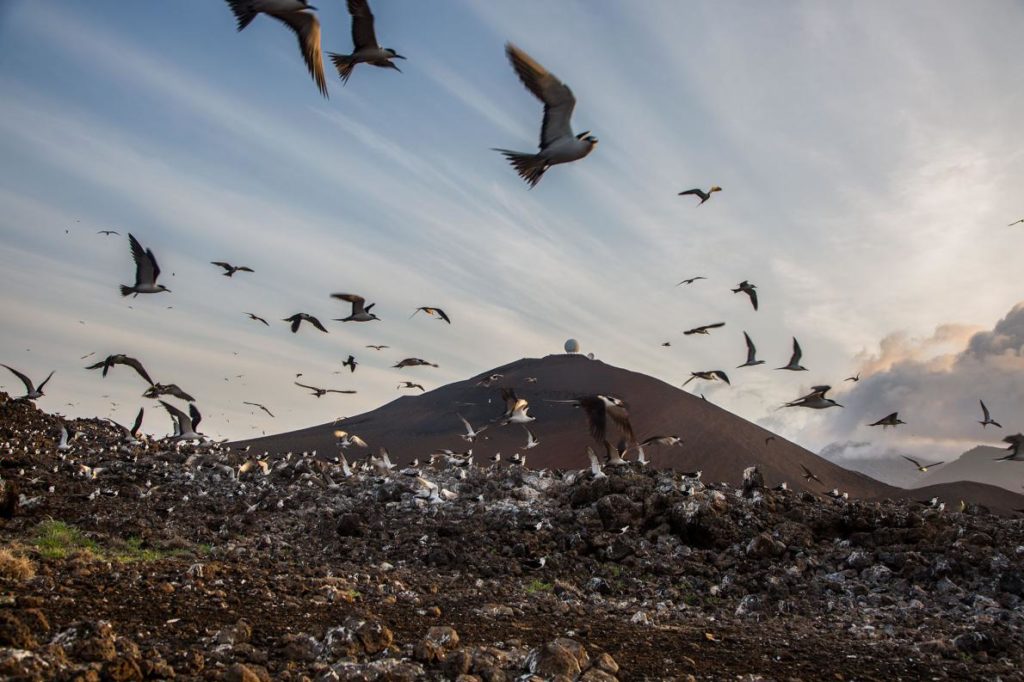
Seabirds on Ascension Island. Photo by Clare Fieseler.
  • It also happens to be longtime friend of Southern Fried Science Clare Fieseler’s first major story for National Geographic, so go follow her on twitter.

Jetsam (what we’re enjoying from around the web)

  • Women have a crucial—yet often overlooked—role in fisheries. The Invisible Fishing Fleet by Ilima Loomis at Hakai Magazine.
  • “What do you do when you’re a graduate student and you’ve been sexually assaulted by the PI of a very exciting paleoanthropological site?” An incredibly powerful piece by Holly Dunsworth: In case this helps you: This happened to me while I was trying to become a paleoanthropologist.
  • The general theme of this site appears to be ‘humans are terrible, robots are awesome’. Staying on brand: In a first, deep sea robots get a close look at giant larvaceans, a key player in the biological carbon pump.
  • Deep-sea mining is really heating up. Locals threaten armed campaign against PNG seabed mine.
  • In the Pacific Northwest, the diligence of citizen scientists is shedding light on the lives, and deaths, of seabirds. Drawing Meaning from Death, One Seabird at a Time by Larry Pynn at Hakai.
  • This is a pretty great demonstration of how statistics can be used to mislead: Generating Datasets with Varied Appearance and Identical Statistics through Simulated Annealing.

Read More “Terraforming Mars on Earth, giant larvaceans, conservation jobs, and more! Monday Morning Salvage: May 8, 2017” »

Understanding Sea Level Rise: Why a linear extrapolation is the least reasonable predictor of future changes

Posted on June 14, 2012June 18, 2012 By Andrew Thaler 2 Comments on Understanding Sea Level Rise: Why a linear extrapolation is the least reasonable predictor of future changes
Conservation, Science

The Division of Coastal Management shall be the only State agency authorized to develop rates of sea-level rise and shall do so only at the request of the Commission. These rates shall only be determined using historical data, and these data shall be limited to the time period following the year 1900. Rates of sea-level rise may be extrapolated linearly to estimate future rates of rise but shall not include scenarios of accelerated rates of sea-level rise.

source (emphasis mine)

This is the text of the notorious, anti-science, anti-coastal community bill that was originally floated in the North Carolina state senate. A revised version of that bill is now under review, with new language that now mandates that:

The Commission and the Division of Coastal Management may collaborate with other State agencies, boards, commissions, other public entities, or institutions when defining sea-level rise or developing rates of sea-level rise. These rates shall be determined using statistically significant, peer-reviewed historical data generated using generally accepted scientific and statistical techniques. Historic rates of sea-level rise  may be extrapolated to estimate future rates of rise but shall not include scenarios of accelerated rates of sea-level rise unless such rates are from statistically significant, peer-reviewed data and are consistent with historic trends.

source (emphasis mine)

While this new language is almost certainly an improvement over the old bill, which was heavily supported by a lobbying group for coastal developers and heavily opposed by organizations that actually care what happens to the Carolina coastline and its historic communities, it is still problematic. By problematic, I mean wrong. And by wrong I mean that by refusing to allow accelerated estimates of sea level rise, it explicitly ignores all the best available science and contradicts 130 millenia of historic precedent.

Read More “Understanding Sea Level Rise: Why a linear extrapolation is the least reasonable predictor of future changes” »

Popular Posts

What Ocean Ramsey does is not shark science or conservation: some brief thoughts on "the Shark Whisperer" documentaryWhat Ocean Ramsey does is not shark science or conservation: some brief thoughts on "the Shark Whisperer" documentaryJuly 2, 2025David Shiffman
That's not a blobfish: Deep Sea Social Media is Flooded by AI SlopThat's not a blobfish: Deep Sea Social Media is Flooded by AI SlopDecember 19, 2025Andrew Thaler
I can serve on your graduate thesis committee. Here’s what you can expect of me, and what I expect in return.I can serve on your graduate thesis committee. Here’s what you can expect of me, and what I expect in return.October 16, 2025David Shiffman
The story of the pride flag made from NASA imagery: Bluesky's most-liked imageThe story of the pride flag made from NASA imagery: Bluesky's most-liked imageSeptember 27, 2024David Shiffman
What can the funniest shark memes on the internetz teach us about ocean science and conservation?What can the funniest shark memes on the internetz teach us about ocean science and conservation?November 8, 2013David Shiffman
Shark of Darkness: Wrath of Submarine is a fake documentaryShark of Darkness: Wrath of Submarine is a fake documentaryAugust 10, 2014Michelle Jewell
The Trouble with Teacup PigsThe Trouble with Teacup PigsOctober 14, 2012Andrew Thaler
I turned my woodshop into a personal solar farm.I turned my woodshop into a personal solar farm.June 21, 2021Andrew Thaler
Norway and Cook Islands put their deep-sea mining plans on pause.Norway and Cook Islands put their deep-sea mining plans on pause.December 3, 2025Andrew Thaler
Nodules, Lost Mines, and Dark Oxygen: A new documentary on deep-sea mining asks important questions about the future of the industry.Nodules, Lost Mines, and Dark Oxygen: A new documentary on deep-sea mining asks important questions about the future of the industry.July 24, 2025Andrew Thaler
Subscribe to our RSS Feed for updates whenever new articles are published.

We recommend Feedly for RSS management. It's like Google Reader, except it still exists.

Southern Fried Science

  • Home
  • About SFS
  • Authors
  • Support SFS


If you enjoy Southern Fried Science, consider contributing to our Patreon campaign.

Copyright © 2025 Southern Fried Science.

Theme: Oceanly Premium by ScriptsTown